Running horror campaigns can be a real blast. Few things get players as engaged and invested in their characters than the chance something terrible is lurking right around the corner.
That said, I suspect that there’s a mistake GMs make more than they probably realize.
Namely, when deciding to run a horror campaign, they just start throwing random stuff at their players that screams “scary.”
I should know, I’ve done that too many times (just ask any of my Call of Cthulhu players).
You know how it goes: start with a creepy abandoned manor here and a couple of resurrected weirdos. Then, there’s that vile tentacled thing under the stairs.
Oh and don’t forget the cult that sacrifices people but also turns some others into goat people.
And that kid with the red balloon. Yeah, fuck him.
On paper, all those things are fun, but it’s too much and there’s a risk players start to see through it or worse lose the tone.
I mean, I can hear them now “okay, what’s the next random thing?”
Too much.
It’s kind of the same way a haunted house movie, a body horror film, and a psychological thriller all feel completely different from one another, even if all three technically qualify as horror.
What unsettles you in The Shining isn’t what unsettles you in The Thing, and neither of those work the same way as Midsommar.
And when it comes to gameplay, the mechanics of what makes each of these things frightening can really be entirely distinct.
The good news is that horror at the tabletop is entirely achievable, able to become consistent, and can be some of the most memorable gaming you’ll ever run.
You just need to pick your lane first, then build everything else around that choice.
What do I mean?
Okay, let’s break down five horror archetypes, look at what makes each of them go ick, and try to figure out how to translate each into a campaign or scenario that actually gets under your players’ skin and stays there.
1. Cosmic Horror – The fear of knowing or not knowing

This one is the big daddy. The cream of the crop. The one everyone reaches for when they say Lovecraftian (and certainly Call of Cthulhu style horror).
It’s also the one we promptly misunderstand the most.
Cosmic horror is not mainly about tentacles and strange names you can’t pronounce. Those parts are all there, true, but I really think it’s about the terror of not knowing, along with the scale of things you do not know.
It works best when it’s about the dawning, horrible realisation that the players, their goals, all of humanity in fact, is utterly insignificant in a universe that is indifferent to our existence.
Worse, when they become briefly aware of it, the thought alone fills their mind with dread.
So, the key emotion you’re chasing here isn’t just icky gross stuff nonstop. It’s about collapsing into despair, and possibly even madness.
Not going too far, of course (you don’t want your players to give up, which is something that happened once in my campaigns… the despair was, well, too all-encompassing that they saw no way forward).
How to run Cosmic Horror
Make your players feel small and out of place before you make them feel overly threatened.
Begin with the weird and the wrong. Start with strange angles in architecture, impossible geometry, or ancient books that shouldn’t exist.
Let them win small battles but never really understand what’s out there, only that it’s something bigger. The big monster, when it eventually arrives, should be fundamentally incomprehensible.
Resist the urge to figure it out like a regular encounter. Don’t bother with stats. Give it vague, unsettling and even contradictory descriptions. Never reveal that it has stats. Make it big. Slow. Lumbering. Hard to understand.
Mechanically, sanity systems suit this flavour well. Call of Cthulhu’s approach is the most developed, but even a simplified sanity track where witnessing certain things causes a gradual, irreversible unravelling rather than a simple debuff can reinforce the
The goal shouldn’t be to defeat the horror, as it’s too monstrous, but to survive it, seal it away, or merely delay it. When players use weapons, it just slows it down and gives them a chance to escape.
Make sure you don’t encourage them to stand and fight (another common mistake). If it is damaged, it needs to basically shrug it off or become more volatile.
Let the players who just plain escaped feel like they succeeded at enormous cost, even if nothing is truly resolved.
Ideas for Implementation
- The players find a journal written by a previous explorer. The entries start normally, then become increasingly fractured and obsessive, until the final pages are just the same phrase repeated hundreds of times, with the last line reading suggesting it’s not over.
- A seemingly helpful NPC gives the party accurate, useful information about the threat they’re facing. Later, the players realize there was no possible way that person could have known any of it. Unless he wasn’t who he appeared to be.
- The party defeats a cultist and discovers a strange tattooed on their body. Most of the locations are identifiably nearby, but one looks like it’s directly underneath… the library, the church, or other marker.
2. Body Horror – the fear of our own skin
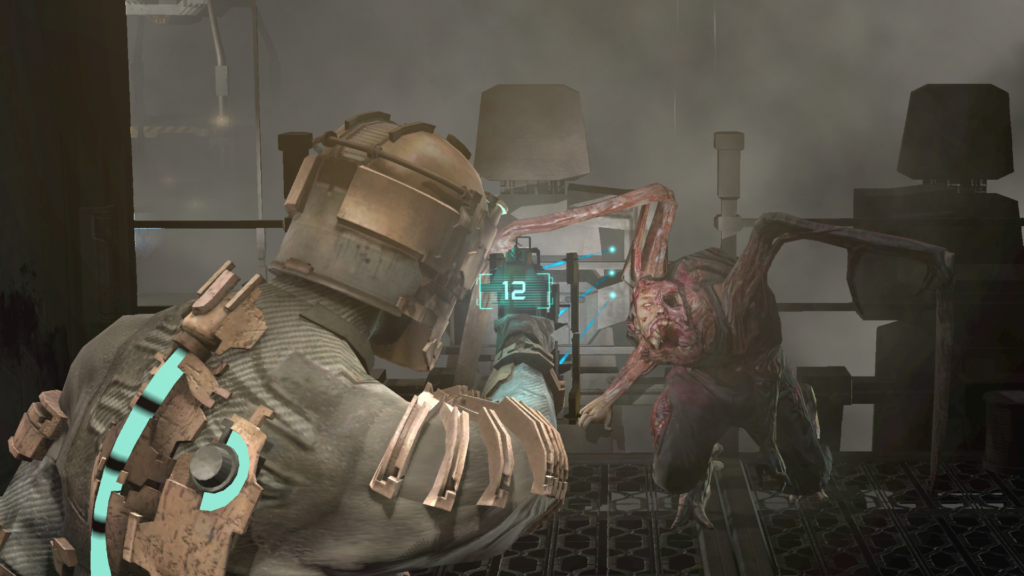
Body horror, if you’re not sure about the term, was super popular in the 80s and 90s. Think about movies like The Thing, any David Cronenberg film, Society, and the like and you know it.
Body horror operates on a visceral, deeply personal level because it attacks the one thing we all share – our own physical form. Our flesh, our skin, our guts and organs.
The horror here is usually about transformation, violation, and the loss of control over the vessel you’ve always taken for granted.
And fluids, so many fluids.
What makes The Thing so effective and so enduringly horrifying is that it fuses body horror with paranoia. The monster isn’t just out there. No, it could be in here, wearing a familiar face, under your own skin or someone you know.
That’s a powerful combination and one that translates remarkably well to the tabletop.
How to run Body Horror
Body horror loses all its teeth if you sanitise it, so be vivid. Hell, be gratuitous and excessive.
The transformation of an NPC the party trusted could be described slowly and with attention to detail. What changes first? What horrifyingly remains the same? What does their voice sound like when they beg for help? Think of a half dozen Stephen King stories where someone whittles away (Thinner, for one).
Or it could be instantaneous and surprising, like bursting out of a chest in Alien.
For maximum effect, consider allowing or even engineering a scenario where player characters are at risk of transformation themselves.
A small scratch, a weird touch, a bad drink. Maybe they ingested whatever it is out there changing folks.
Even the threat of it changes player behaviour dramatically. Mechanically, infection and disease in game systems work wonders here. An in-game timer that players know about, a gradual series of checks, or symptoms they can try to hide from each other, etc.
Ideas for Implementation
- An NPC the party has grown fond of starts showing small, easy-to-dismiss symptoms, like a persistent cough, a hand they keep flexing, a reluctance to eat in front of others. Let it build over several sessions before the reveal.
- The party finds a room in a dungeon that appears to be a nest. The materials used to build it include armour, clothing, and personal effects they recognize as belonging to a missing member of a previous expedition.
- A PC is injured by a strange cultist. Afterwards, the flesh knits back together in the right place but the texture is subtly different, and the character’s player notices their stat block has changed in a small, unexplained way.
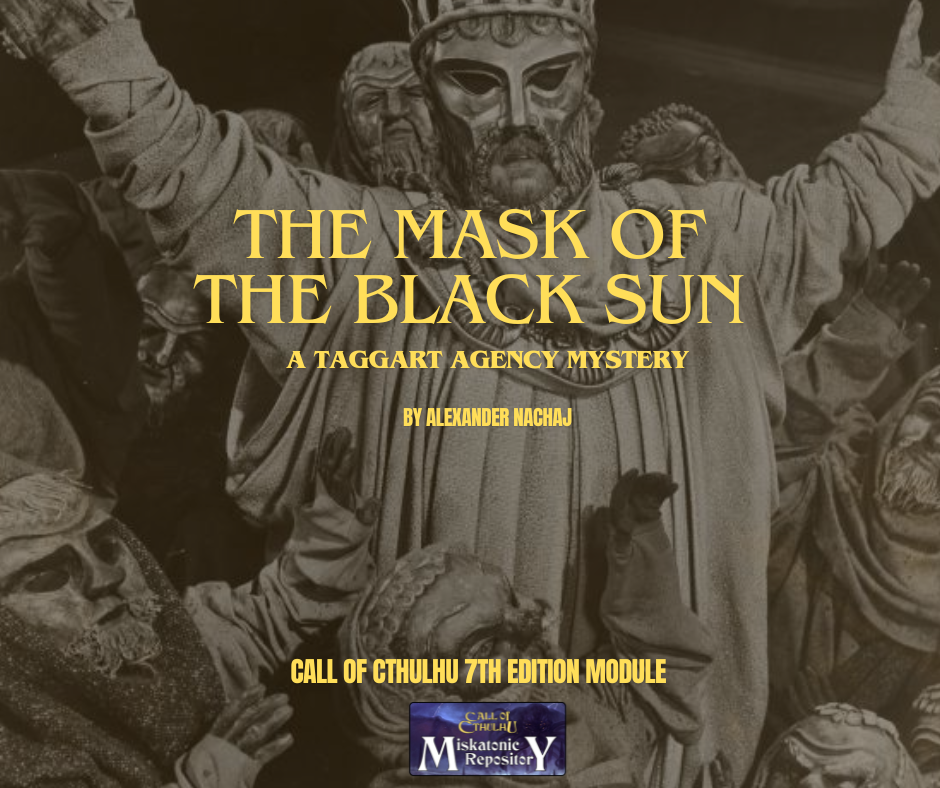
P.S. if you’re looking for a quick module that combines body horror with some cosmic horror, consider checking out The Mask of the Black Sun we released for Call of Cthulhu.
3. Psychological Horror – the fear is all in your mind, right?
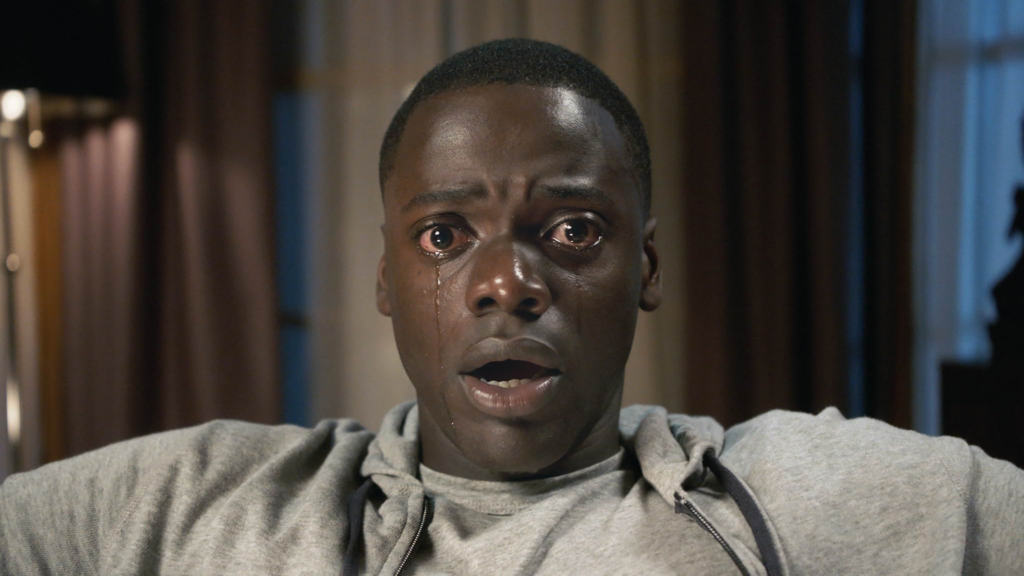
This is the most technically demanding type of horror to run at a table, and also possibly the most rewarding when it lands.
Psychological horror is an Alfred Hitchcock movie, 90s thrillers, the sense that everyone is against you in a conspiracy (and probably is).
The horror isn’t overt, isn’t monstrous (in a literal sense) but it comes from the players realizing something isn’t right and they’re not sure what.
The challenge is obvious: tabletop RPGs are collaborative, which means players share information and compare notes constantly. It’s hard to gaslight an entire party.
Hard, but not impossible I hope.
How to run psychological horror
The key is unreliable narration. Not necessarily from you as a DM or GM, but from what is fed to them from the world around them.
One NPC says something that contradicts another in subtle ways. People backtrack and change their stories. Make sure everyone lies.
Hell, one thing I did once was separate the players over the course of the evening and fed them each slightly different information. You can also pull this off with private chats, passing notes, or just pull them aside.
Make seemingly small differences in what each character perceives. When they start comparing notes and find inconsistencies, you’ve already won. They’ll start questioning everything. Let them do the paranoid work themselves.
You will need to, however, establish early in the campaign that the world of the game may not be what it appears to be. Otherwise, they might think you just made a mistake.
Do this by planting one or two small, easily dismissed anomalies in the very first session. An NPC dies, but people claim that never happened. Someone goes missing, and they ask “who?” Could even be a person in a photograph no one remembers existing.
These will seem like nothing then. Later, they’ll seem like much more.
Ideas for Implementation
- Pass two different players a private note during the same scene describing the same NPC differently. One says they seem calm and helpful, the other says they seem nervous and evasive. Don’t explain the discrepancy. Let them argue about it later.
- Have the party return to a location they’ve already visited and describe one detail differently than you did before. When they push back, insist that’s how it’s always been. Plant the seed of doubt without ever confirming either version.
- Give one character occasional flashes of memory of events that, as far as the rest of the party is concerned, never happened. Keep them just plausible enough that the player isn’t sure if their character is losing their mind or if they’re the only one who knows the truth.
4. Folk Horror – when weird people are the real monsters
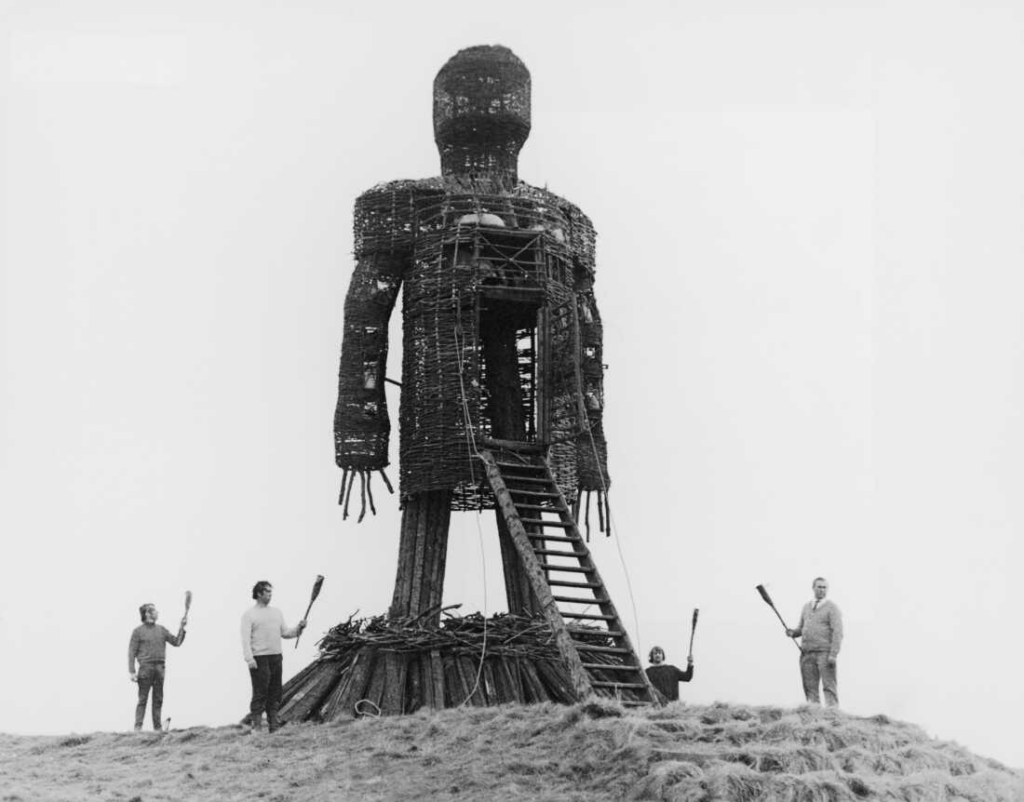
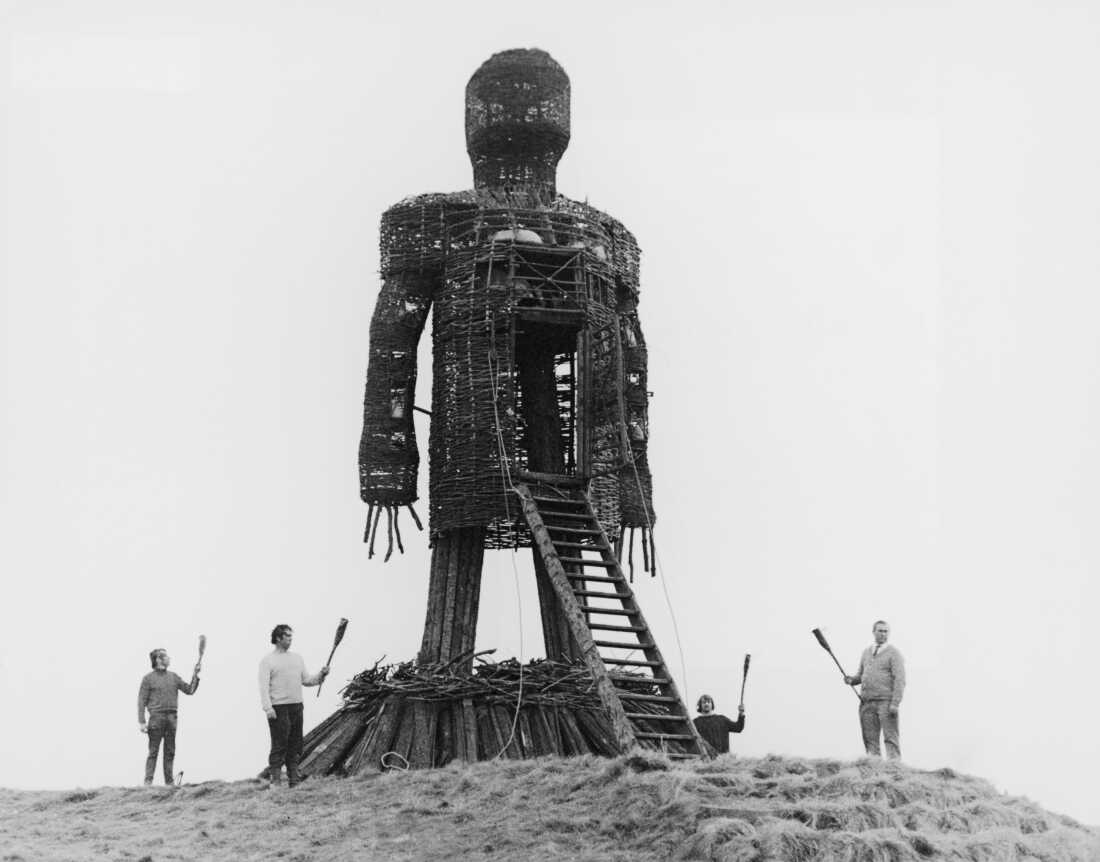
Source: https://www.npr.org/2024/10/04/nx-s1-5138373/folk-horror-movies-the-wicker-man-midsommar-hereditary
Think about movies like The Wicker Man, Midsommar, The Witch, and even Children of the Corn.
What do they all have in common? Weird places, weird people, usually rooted around nature.
Folk horror is almost always quiet, pastoral, peaceful and yet deeply insidious.
It works by inverting the expected horror formula where instead of outsiders threatening a community, the community itself is the threat, and the outsiders only slowly realise the trap after it’s too late.
I kind of feel that this is one of the most underused horror archetypes in tabletop gaming, which is a shame because it suits the format wonderfully.
A party of adventurers arriving in a friendly village where the night’s events take place is practically its own genre at this point, but most GMs never lean into the full potential of making the villager (and not the problems outside the village) genuinely, collectively, calmly threatening.
How to run folk horror
The slow burn is everything. Build things up.
Your villagers should not be threatening at first. They could be charming, generous, and even a little too insistent that the party stay for the upcoming festival.
Build the web of strangeness gradually. The old woman who smiles too long. The children who ask oddly specific questions about the party’s backgrounds. The locked door at the inn that no one mentions.
And the odd occultic symbols hanging from the trees or carved into door frames.
Crucially, the horror should be rooted in something real and old. It could be a pact, a debt, a ritual the community genuinely believes in.
The most unsettling folk horror communities aren’t cackling villains but folks who believe they’re doing the right thing even if that thing is horrible.
Heck, they might even be sad about what has to happen, but better to outsiders, right? Adventurers or investigators, loners all, who no one will miss.
The best mechanical touch you can add here is to give the party legitimate reasons to stay. A broken cart or transit system, an injured companion, a quest lead that requires local knowledge, and so forth.
The creeping realization always pairs well when leaving is no longer simple.
Ideas for Implementation
- Every home in the village has the same small carved figure above the door. When the party asks about it, the locals say it’s just a good luck charm and seem genuinely puzzled that anyone would find it noteworthy.
- The village elder invites the party to stay for the festival, which is three days away. As people pour into the village, it becomes more and more difficult to leave.
- The party discovers that the village has no graveyard. When they ask where people are buried, they’re told warmly that no one has ever died here. The locals seem proud of this fact.
5. Haunted Location Horror – the place is the horror (AKA the haunted house)
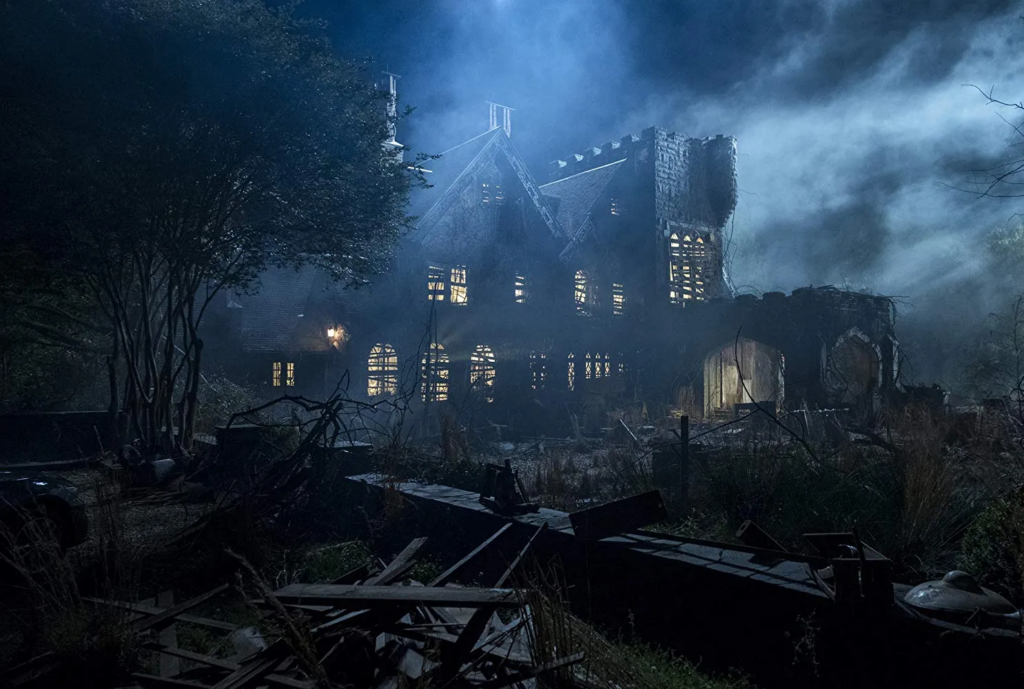
This is really the classic horror trope. Stuff you’ll find in 1800s novels all the way to Mike Flanagan’s entire Netflix catalogue.
A location that is wrong in some deep, accumulated way. Usually soaked in memory, grief, or malice. It’s the house that watches. The asylum that breathes. The manor that remembers.
This is probably the most approachable type of horror to run as a one-shot or a contained arc, and it benefits enormously from a little prep. Think of the location as a character, and like any character it needs history, motivation, and personality.
How to run location horror
Build your location before you build any encounters.
Decide what the place was, what happened there, what it wants (if it wants anything), and what it remembers.
Hauntings with internal logic are infinitely more effective than random spooky events or jump scares. When players can piece together a coherent, tragic story from the clues embedded in the environment, the horror becomes emotionally resonant rather than just startling.
Use all the senses. Cold spots in some rooms. The smell of a perfume with no source. A melody no one is playing. Sounds carry horror remarkably well at the table because they’re abstract. The players have to imagine what they’re hearing, and imagination is your most powerful tool.
Mechanically, consider making the location itself capable of action. Not through combat encounters, but through the environment changing. Doors that were open are now closed. A painting the party passed on the way in now depicts a scene none of them remember seeing. The nice wedding image is now one of utter body horror.
Oh and have a staircase that now leads somewhere it shouldn’t. Those are fun.
Either way, let the players feel the building operating around them with a mind of its own.
Ideas for Implementation
- The party finds a room that, by all logic of the building’s layout, shouldn’t exist.
- Every mirror in the building is covered. One isn’t covered completely. In the gap, the party can see a reflection of a room, just not the room in which they’re standing.
- The building keeps returning the party to the same corridor no matter which direction they walk. Each time they loop back, one small detail has changed. By the fourth or fifth loop, something is sitting in a chair at the end of the hall that wasn’t there before.
Picking Your Horror Type (And how to stay in it)
So that’s the run of it. Five types of horror for five types of campaigns or one off sessions.
None of this is to say these types of horror never overlap, of course, the best horror often blends two, and doing so deliberately can be enormously effective.
Folk horror and haunted location horror are natural companions. Body horror and cosmic horror too go hand in hand.
So, from my perspective, the GMs who struggle with horror campaigns almost universally make the same mistake. They know what scary things are, have some great ideas, but then they either forget about what mechanics to support them, or how to keep them consistent.
Like I said, I’ve been there and done that. Too many times.
So, why not decide first. Build everything afterwards.
Your players will feel it. It will spook them, and that’s the whole point.
Good luck!
Curious about leaning further into horror? Consider trying Call of Cthulhu! It’s a great tabletop alternative to D&D and it leans fully into pretty much each of these horror archetypes.